International scholars and strategic affairs experts on Tuesday called for greater regional cooperation, diplomatic engagement and the development of new international arrangements, saying the changing global power balance and weakening of traditional alliances were reshaping the international order.
ISLAMABAD, Nov 10 (APP): International scholars and strategic affairs experts on Tuesday called for greater regional cooperation, diplomatic engagement and the development of new international arrangements, saying the changing global power balance and weakening of traditional alliances were reshaping the international order.
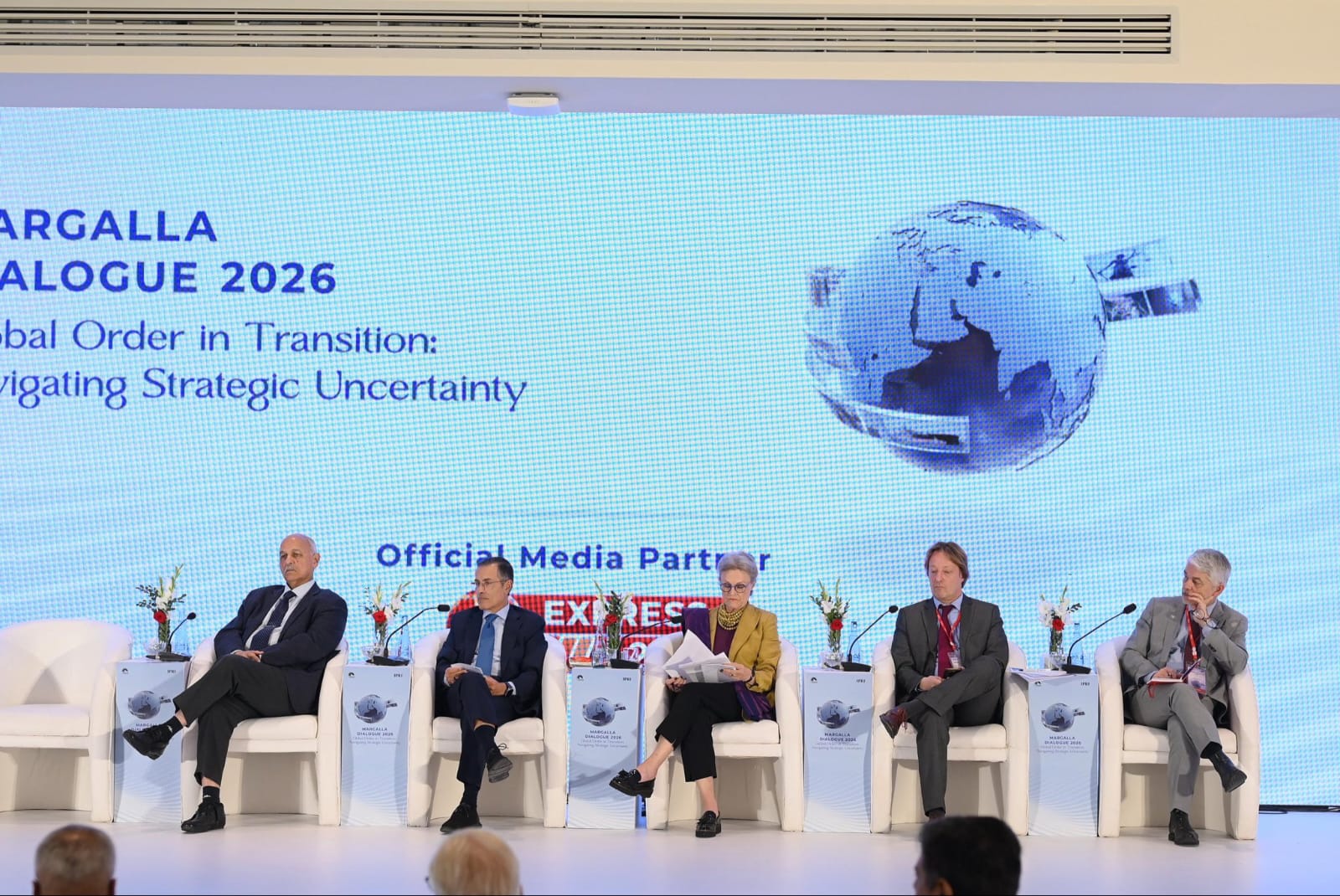
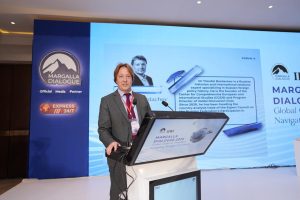
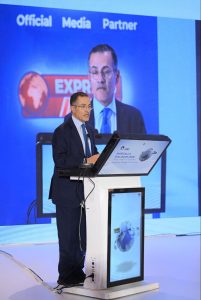
They were speaking at a forum titled “Geopolitics and the Realignment of Global Power” during the Margalla Dialogue 2026, held under the theme “Global Order in Transition: Navigating Strategic Uncertainty”. The session was moderated by Fahd Husain, Executive Director and Anchor at Express Media Group.
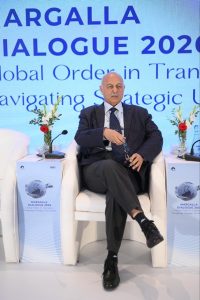
Senator Mushahid Hussain Sayed, Chairman of the Pakistan-China Institute, delivered the keynote address and said the recent developments in West Asia had changed the traditional regional alignments, creating greater space for regional powers, including Pakistan and Türkiye, to influence the region’s future.
He described the emergence of Muslim middle powers, including Pakistan, Iran, Türkiye and Indonesia, as an important development that could shape regional politics in the coming decade.
Referring to Pakistan’s historical links with the Muslim world, he said the country’s foreign policy outlook had never been confined to South Asia. He recalled that Quaid-e-Azam Muhammad Ali Jinnah, during an interview in Cairo in December 1946, had described Pakistan as a source of strength for Muslims in the Middle East.
Senator Mushahid said Pakistan had consistently supported the Palestinian cause and maintained close relations with Muslim countries. He said the country’s engagement with Türkiye, Gulf states, Iran and other regional partners reflected its longstanding interest in regional peace and stability.
Professor Dr Vali Reza Nasr, Majid Khadduri Professor at Johns Hopkins University, USA, said the international liberal order was weakening and the world was entering a new era of uncertainty, with traditional power balances and regional security arrangements undergoing major changes.
He said the recent conflict involving Iran had challenged the assumption that the United States could exercise unrestricted global power, demonstrating the limits of military superiority when confronted by a determined middle power. He said the conflict had accelerated the weakening of existing alliances and security arrangements, while reducing Washington’s ability to manage regional developments.
Dr Nasr said the United States and Israel had failed to achieve their strategic objectives through military action, while the vulnerability of American military bases had raised questions among Gulf countries about the reliability of US security guarantees. He warned that the changing regional environment could encourage an arms race involving missiles, drones and nuclear capabilities, increasing the risk of nuclear proliferation.
He said the future security architecture of West Asia was likely to involve a greater role for Iran and China and a reduced American presence, with continued rivalry between Iran and Israel remaining a major source of instability. He added that Iran’s reliance on indigenous technology, national resilience and public mobilisation could influence how other countries approach their security in an increasingly uncertain world.
Dr Nasr said Pakistan had also gained greater prominence in regional security discussions because of its geographical position and exposure to developments in West Asia, adding that it had an important role to play through diplomatic engagement and efforts to promote stability.
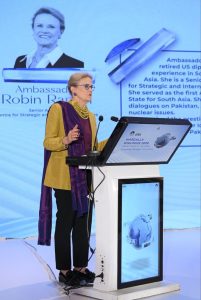
Ambassador Robin Raphel, Senior Associate at the Centre for Strategic and International Studies (CSIS), USA, said the international system was undergoing a major transition, with the United States contributing to global uncertainty by departing from the rules and principles of the order it had helped establish.
She said the weakening of existing institutions and alliances also offered an opportunity to develop new arrangements reflecting changing global realities. “The balance of power was shifting from West to East and from North to South, with China and emerging powers such as Brazil, Indonesia, Nigeria and South Korea gaining greater influence”, she added.
Ambassador Raphel said these countries were reluctant to align themselves exclusively with either Western democracies or authoritarian powers. She discussed the proposal for a “global concert” of major powers, including the United States, China, Russia, Japan and the European Union, alongside regional organisations such as ASEAN, the African Union and the Arab League, to coordinate responses to international challenges.
She said such an arrangement could complement the United Nations by facilitating dialogue on regional conflicts, trade, climate change, artificial intelligence, terrorism, health and education. Referring to the concept of “competitive coexistence”, she said sustained dialogue among major powers and diplomacy should take precedence over military confrontation.
She said Pakistan had considerable diplomatic experience and could contribute to regional mediation, particularly in West Asia, and efforts to strengthen multilateral institutions.
Dr Timofei Bordachev, Programme Director of the Valdai Discussion Club, Russia, said the international system was passing through a period of transition marked by a shift in global power, with the United States facing limitations in its influence while China continued to strengthen its position.
He said competition between Washington and Beijing would remain the central feature of international politics in the coming years and could take the form of a new Cold War based on mutual containment. He identified maritime trade routes and advanced technologies, particularly artificial intelligence, as the main areas of this competition.
Dr Bordachev said geography, international order and national power remained the three key factors shaping relations among states, but all were undergoing significant changes. He said geographical location influenced how countries viewed security and used their resources to protect national interests, while military strength continued to be a major factor in international politics.
He said recent developments involving Iran and Ukraine showed that even major powers could face difficulties in achieving their political and strategic objectives through military strength alone. He also highlighted a paradox in global power politics, saying that while the main strategic competition was between the United States and China, the greatest concentration of nuclear military power remained with the United States and Russia.
Professor Dr Carlo Masala of Bundeswehr University Munich, Germany, said it was too early to determine whether the ongoing shift in global power would result in a bipolar order led by the United States and China or a weakened unipolar system.
He said claims about the emergence of a multipolar world were not supported by the overall balance of military, economic and soft power capabilities, adding that only Washington and Beijing currently possessed the resources to shape the global order at that level. He noted that the European Union remained a major global economic actor, particularly in international trade.
Dr Masala said the outcome of Russia’s war against Ukraine would have a greater impact on the future structure of the international system than developments in the Gulf. He pointed out that seven of the world’s nine nuclear-armed states were directly or indirectly involved in the conflict, underlining its wider implications for global security and the balance of power.
He also warned that the continuing war in Ukraine carried the risk of further military confrontation in Europe and could test NATO’s resolve.
Earlier, Professor John J. Mearsheimer, R. Wendell Harrison Distinguished Service Professor of Political Science at the University of Chicago, USA, delivered the keynote address at the Margalla Dialogue.