Director of the Force Research Institute, India, Parvin Sawhney on Tuesday said China and Russia were playing a leading role in shaping regional institutions and the emerging global order, urging middle powers, including Pakistan, to strengthen their engagement with these platforms to advance their national interests.
China, Russia shaping emerging global order through regional institutions: Parvin Sawhney
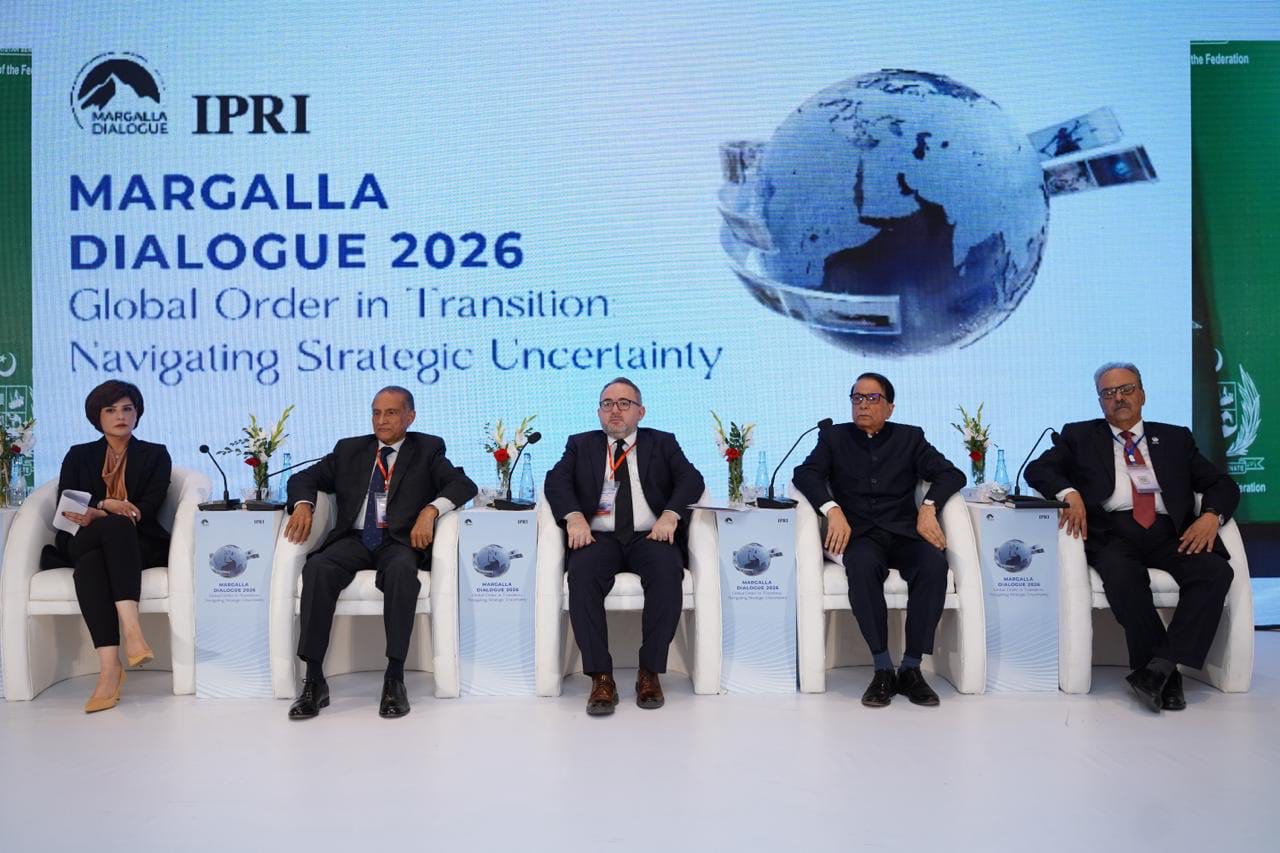
ISLAMABAD, Nov 10 (APP): Director of the Force Research Institute, India, Parvin Sawhney on Tuesday said China and Russia were playing a leading role in shaping regional institutions and the emerging global order, urging middle powers, including Pakistan, to strengthen their engagement with these platforms to advance their national interests.
Addressing Forum B, titled “West Asia-South Asia: Geopolitics of Connectivity and Competition”, at the Margalla Dialogue 2026, themed “Global Order in Transition: Navigating Strategic Uncertainty”, he said the geopolitics of West Asia and South Asia could no longer be viewed in isolation from wider global developments.
He identified five major shifts in the international system, including the emergence of a multipolar world, the growing influence of the United States, China and Russia, and the increasing importance of artificial intelligence and critical technologies in global competition.
He said major powers had the strategic autonomy to shape foreign policy and establish institutions, while middle powers needed to pursue their national interests through the existing institutional frameworks.
Sawhney said China and Russia had advanced a vision of a new world order centred on development, peace, sovereignty, equality, indivisible security and the United Nations, attracting interest from several countries of the Global South.
He described Central Eurasia as a key region in global geopolitics, covering South Asia, East Asia, Central Asia, parts of Russia and China, and the Western Indian Ocean, which includes important maritime chokepoints.
He said Russia had initially promoted the concept of a Greater Eurasian Partnership in 2015 to strengthen trade, connectivity and development across the Eurasian landmass. Following the Ukraine conflict, Moscow had increasingly focused on security cooperation with countries in its neighbourhood and wider Asia.
On China’s role, he recalled President Xi Jinping’s announcement of the Belt and Road Initiative in 2013, saying Beijing had initially viewed the region mainly as a trade and connectivity hub. However, cooperation with Russia had expanded the focus to include security and institutional development.
He referred to the SCO summit in China in September 2025, where, according to him, initiatives included the Global Governance Initiative, a 10-year development plan for the organisation and proposals to strengthen its financial mechanisms.
Comparing the approaches of major powers, Sawhney said Russia and China were building institutional frameworks in the region, while the United States was primarily pursuing trade and connectivity arrangements.
He cited Washington’s engagement with Central Asian countries and efforts to promote the Middle Corridor through the Caspian region, the South Caucasus and Türkiye as examples of its focus on trade routes and access to critical minerals.
He said Pakistan was already part of important regional platforms, including the SCO, and could benefit from greater engagement with institutions shaping the emerging regional order.
He stressed that the country’s geographical position and links with the Global South provided opportunities to advance economic development through regional cooperation and connectivity.